It is long since we last wrote, and there are reasons as well as excuses! Followers of our Facebook presence have had frequent insights into our activities, but your usual blog-poster moved to the North East and with the upheaval of moving, settling in and getting involved in my new life, my opportunities for writing the blog didn’t always coincide with the busy BHPG schedule. Apologies from us all. There is now so much to say that we are posting two separate blogs to cover May to July, and August to October.
Perhaps the most significant impact on the garden throughout the year was made by the unpredictable and variable weather, from cool and cloudy, to hot and sunny, to floods and hailstorms. However, it has not deterred either the team, or our visitors. In early May we were pleased to welcome a birdwatching group from Macclesfield to enjoy the tranquillity and birdsong of the Physic Garden. They noted 10 bird species in a 15-minute watch – Blackbird, Blue Tit, Chiffchaff, Collared Dove, Great Tit, House Sparrow, Robin, Song Thrush, Wood Pigeon, Wren – and an Ashy mining bee. The group said, ‘We explored the hidden gem that is Congleton Bath House and Physic Garden. Incredible to discover such a special place in the centre of town’.
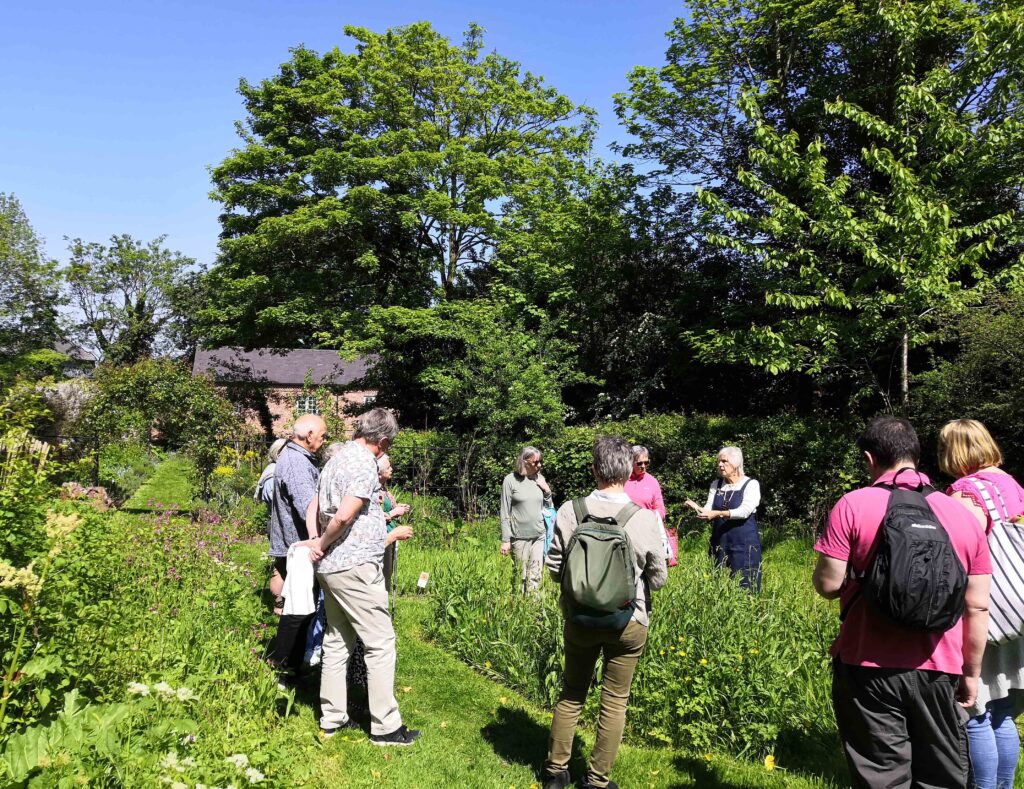
Later in the month, we had a lovely sunny day for our spring Open Day, when lots of people discovered this secluded spot for the first time, and learned about the history of the Bath House and the properties of the Physic Garden plants. The smaller image shows a view of the Officinalis Bed and the Rose Arch; in the other picture Barbara Wilkinson of the Herb Society describes the uses of Ribwort Plantain.
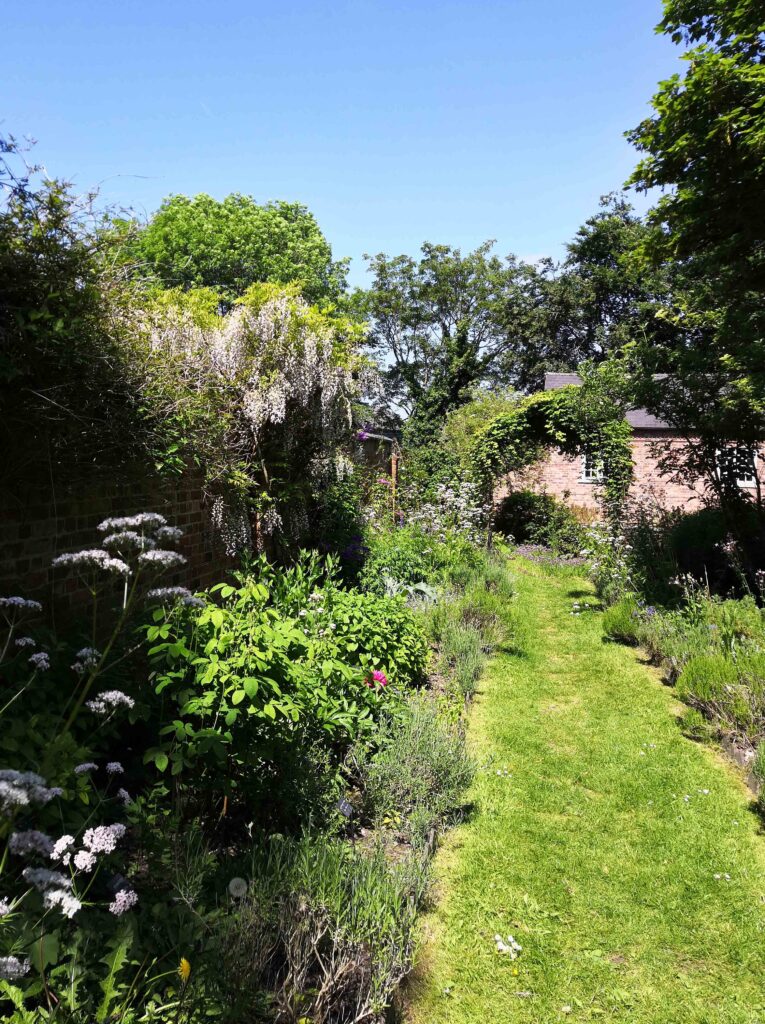
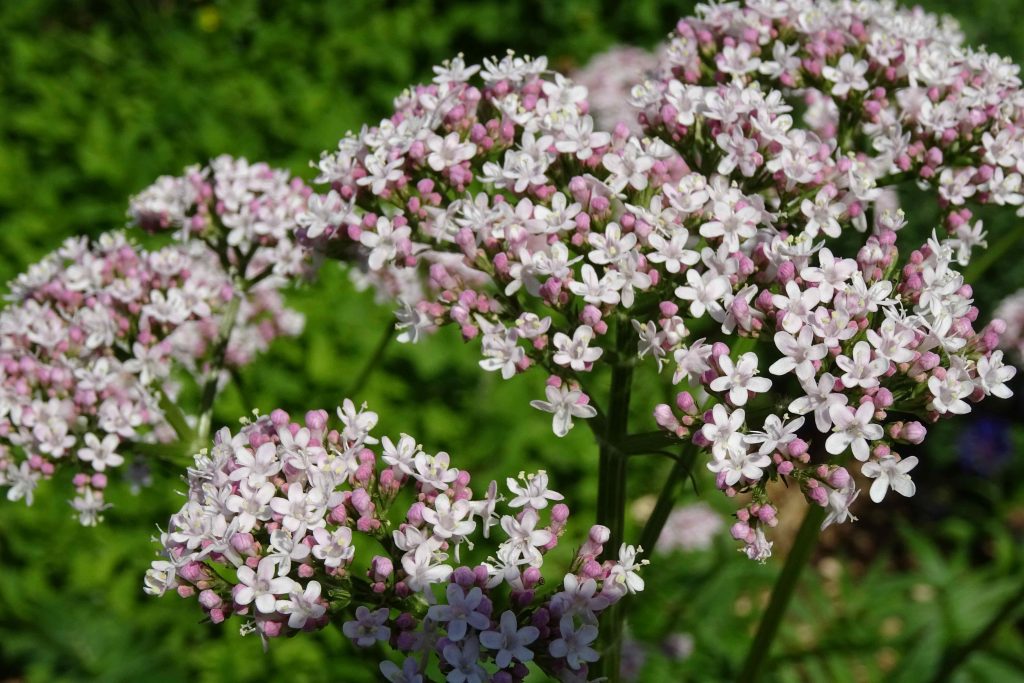
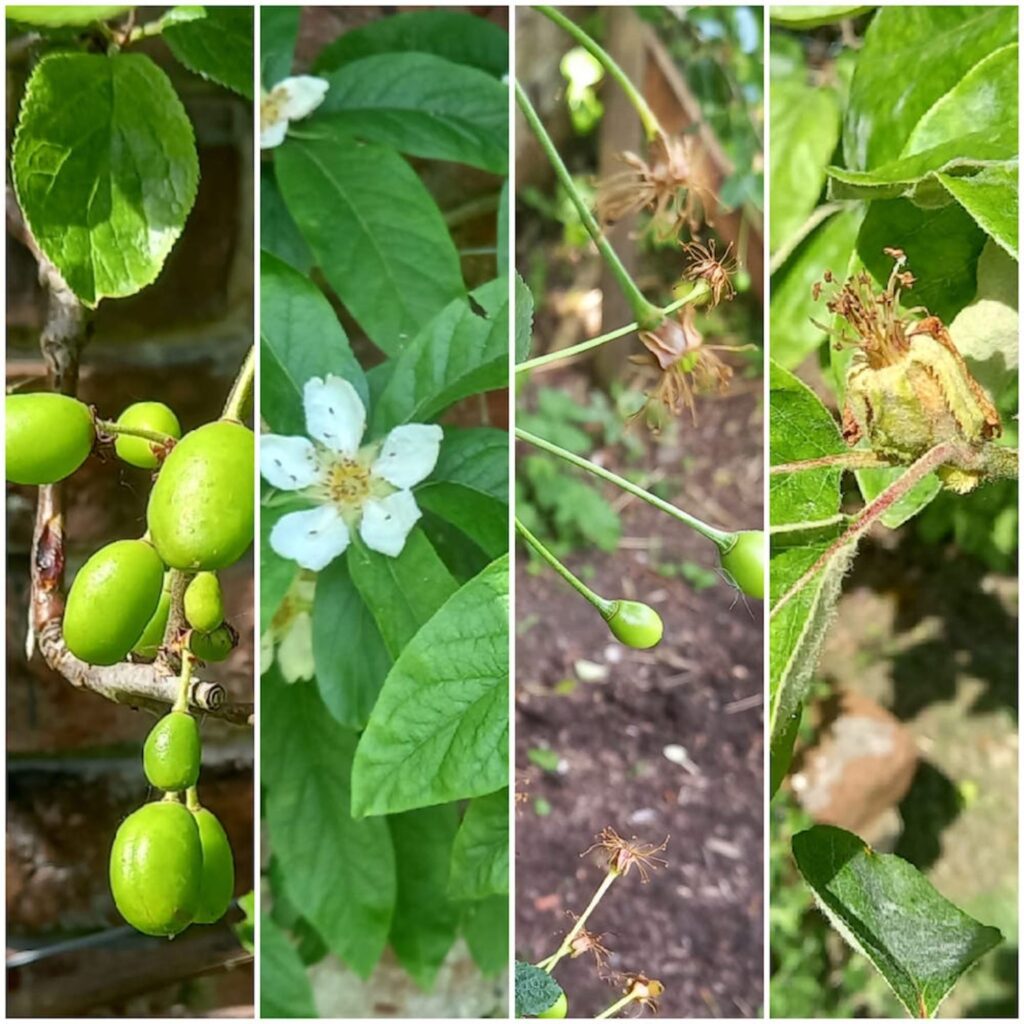
As June began we had several consecutive days of sunshine and warmth. The borders filled up with new growth, including the small but pretty Ajuga, the pink-blossomed Valerian filled the air with fragrance, and an abundance of blossom on the trees shows signs of fruit developing.

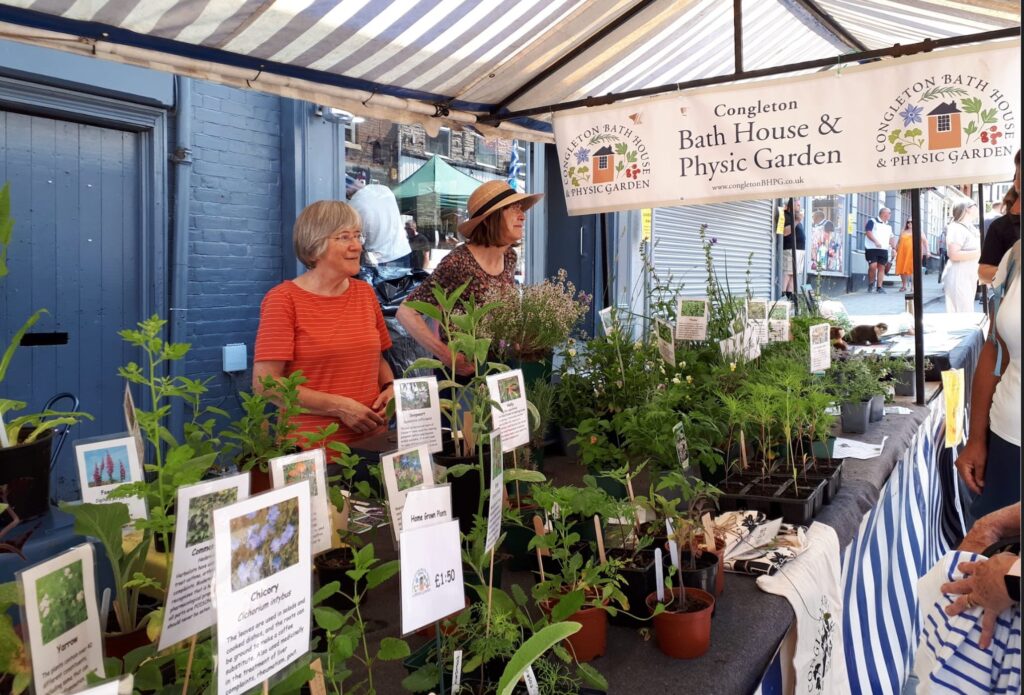
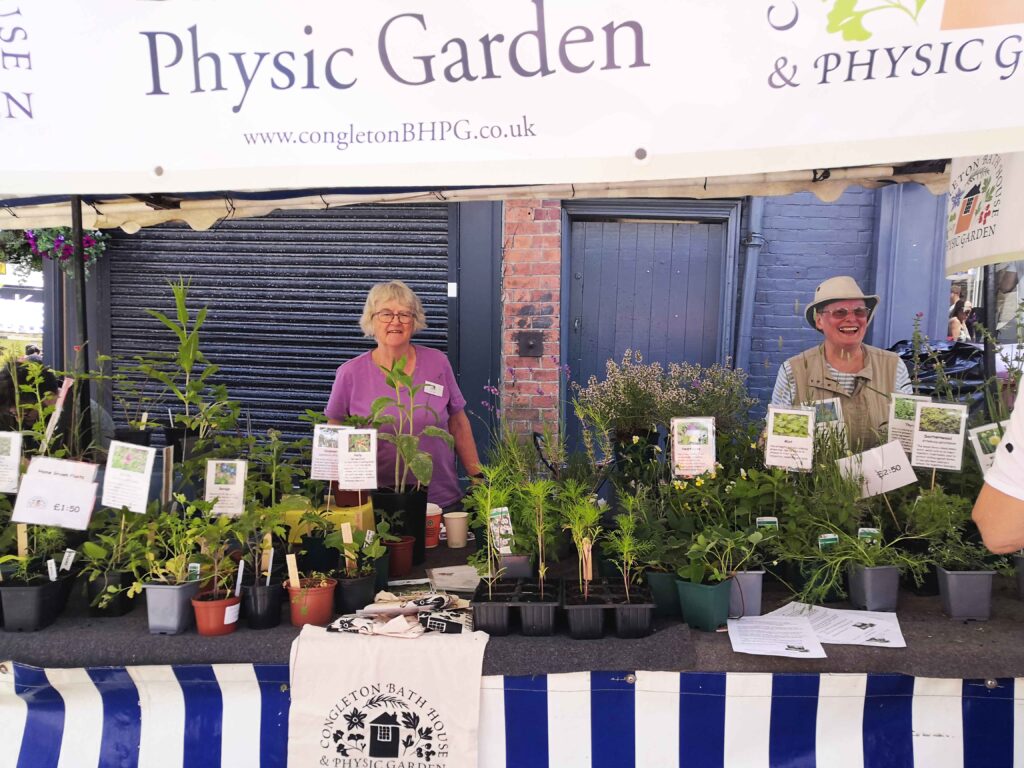
As every year, mid-June found some of the team behind a stall in Congleton town centre for the Food and Drink Festival. It was excessively hot; but worth it to have more people finding out about what we do. And, of course, putting a bit of cash in our coffers to help pay the bills – thank you to all supporters!
The recently completed building for volunteers has made a real difference to our work, offering a safe and supportive environment for our hard-working team. Several years of hard work, with the financial support of local grant-awarding organisations, have made this a reality for us. June saw the start of the paving project: hard landscaping to improve the safety and accessibility of our site. It has been long in the planning, and we are again grateful to local charities who have provided much of the funding to make it possible.


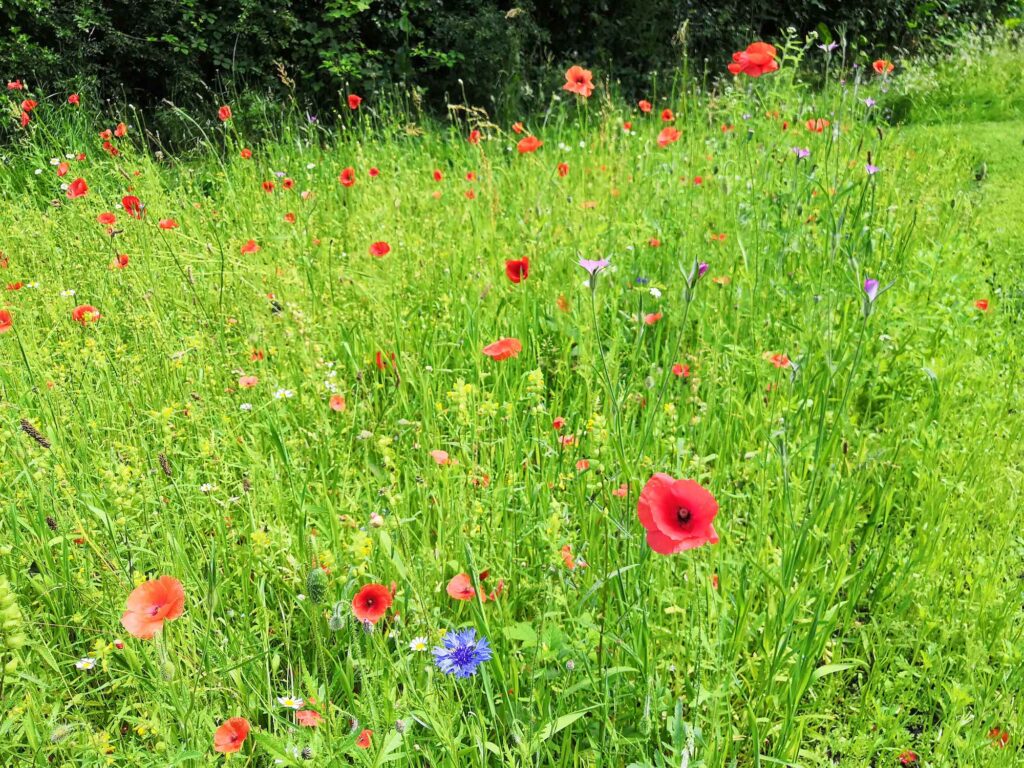
June brought plentiful amounts of sun and rain: the rose arch even stood up to a battering by an unseasonal hailstorm! All this new growth in the borders necessitated much work! But we took a break to admire the wildflower meadow, well worth the hard digging early in the year.


In early July, visitors might have wondered about the plant with blue flowers writhing around the ground near the pond: it is called Vipers Bugloss. It is easy to see where the reference to vipers comes from, with its coiling scaly stems, and the shape of the flower head. The flowers even have forked tongues emerging from them. The ‘Bugloss’ part of the name comes from Latin/Greek for ox-tongue, due to the rough hairy leaves. The similarity to snakes led to an ancient belief that the plant would be effective against snake-bite – even as a protection before being bitten. The juice of the plant is in fact an emollient for irritated skin – such as one might have after tangling with the rough stalks and leaves! You can find more about this, and many other interesting plants, in our database, using the link on the home page or here.
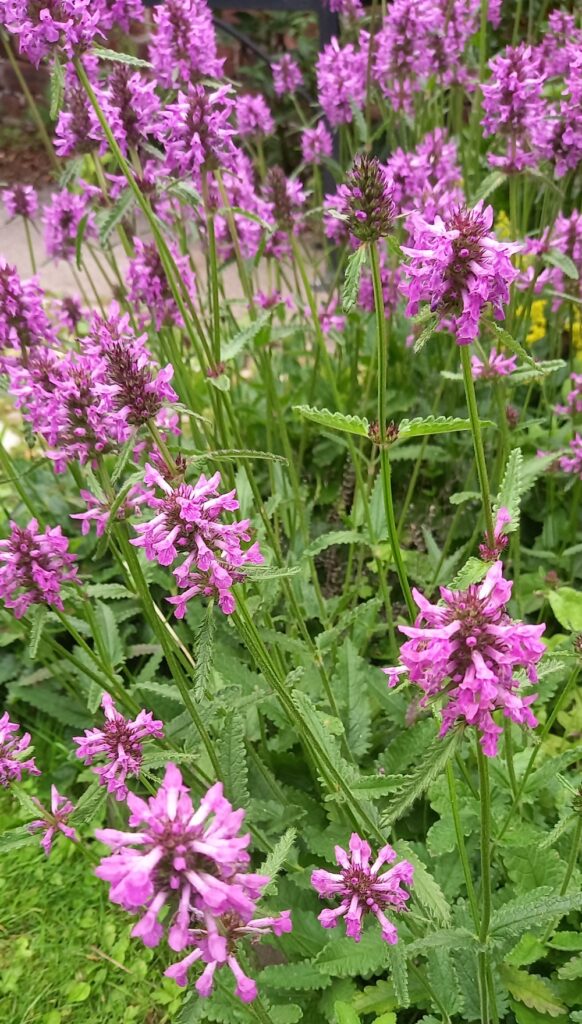
We welcomed the return of our Common Spotted Orchid, seen for the first time last year, in the no-mow part of the lawn. We don’t draw visitors’ attention to it – one might be tempted to take it as a souvenir. The Betony put on a wonderful show, and the Mulberry has produced fruit.


As in other years, we took part in the RHS In Bloom competition, and we had a good visit in early August by the very interested and friendly judges. The Chair of North West in Bloom not only showed interest in the plants, but also noticed our utility building. He commented on the importance of providing an appropriate environment for volunteer groups, that in his experience this was often lacking or overlooked. We were also very pleased to see that the Congleton Chronicle included text and pictures about us in their piece. It all seemed to go very well, and the outcome will be reported in the next blog!