
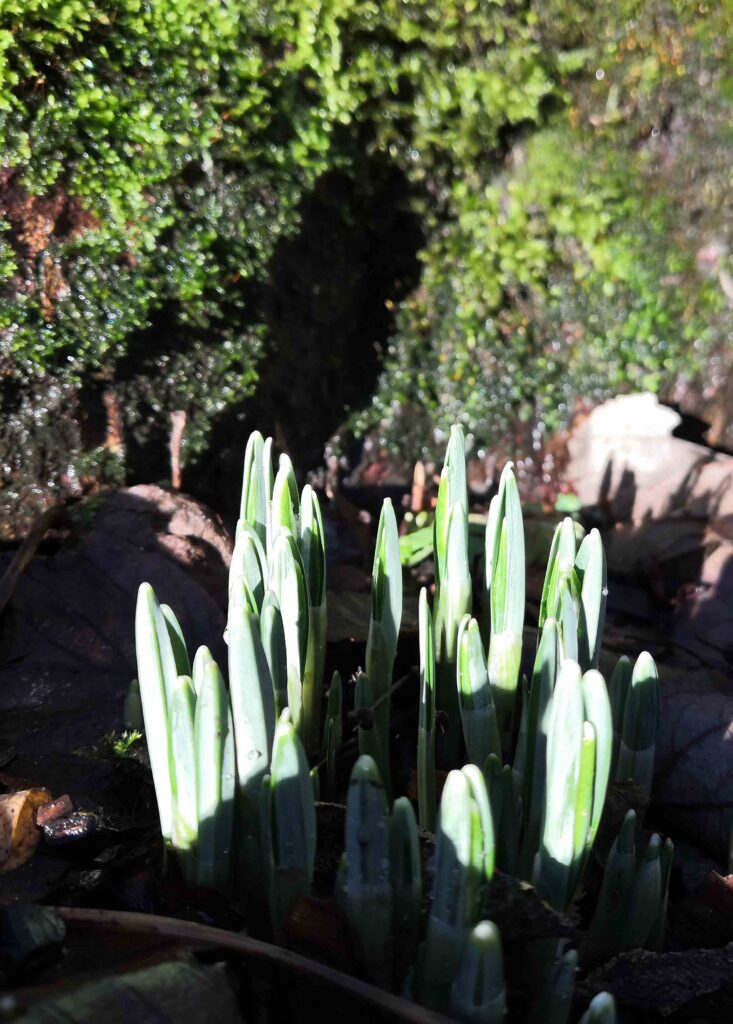

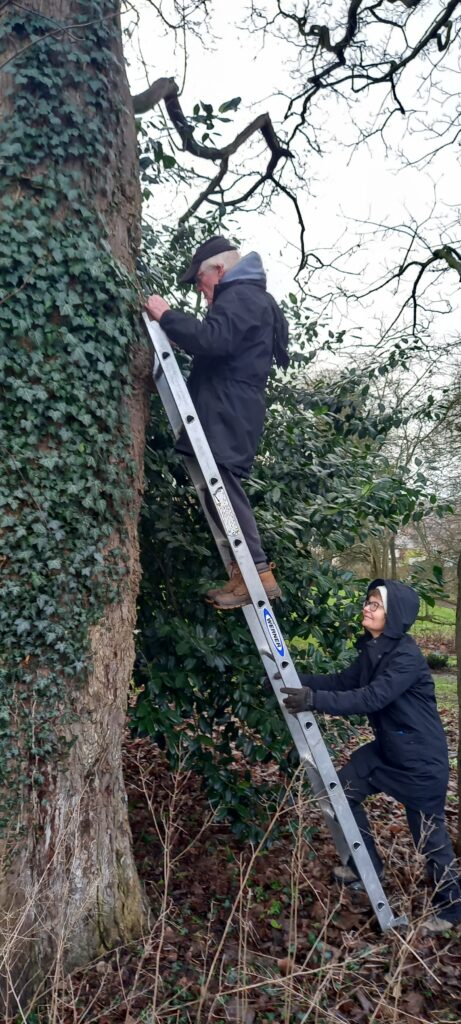
We started the new year having experienced a colder than usual December; then the wetter, unsettled weather at the end of the month continued into January. Later in this grey month we were relieved to have some sun: constant rain is good for neither man, beast nor flower! Snowdrops began to emerge in January and showed us the first signs of spring, so despite the scarcity of sunshine we thought it was time to prepare the garden for new residents, with home-made boxes for insects and birds. The tit box was fixed at the top of the ladder’s reach, while robins will be quite happy lower down. And did you ever see so smart an insect hotel?

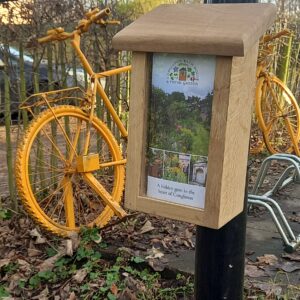
With the new season’s human visitors also in mind, we finally installed the long-wished-for leaflet holder, thanks to a town council grant.
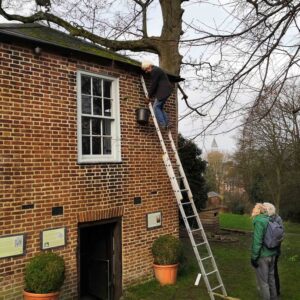
February routine maintenance tasks included clearing the gutters – Nick tackled this chore, now all his building work is complete.
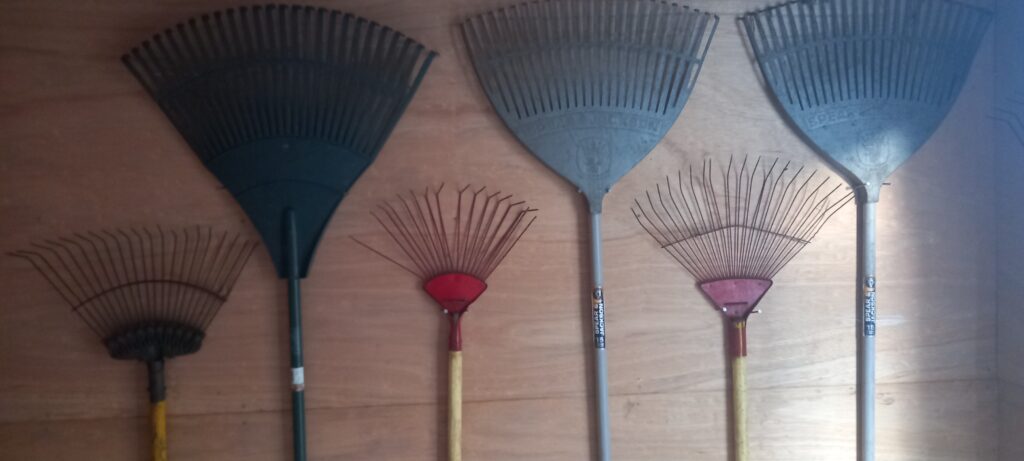
The new building provides plenty of storage for tools of all types. Our equipment can be arranged usefully – even, some would say, artistically.

Though the weather was cold and damp, it did not stop our woodland garden plants creating a wonderful display again. The native Daffodils, Primroses, Cowslips and Lungwort were all in full colour by March.
The dandelion look-alike is actually Coltsfoot: the flower comes up early in the year, with the colt’s foot shaped leaves opening later.
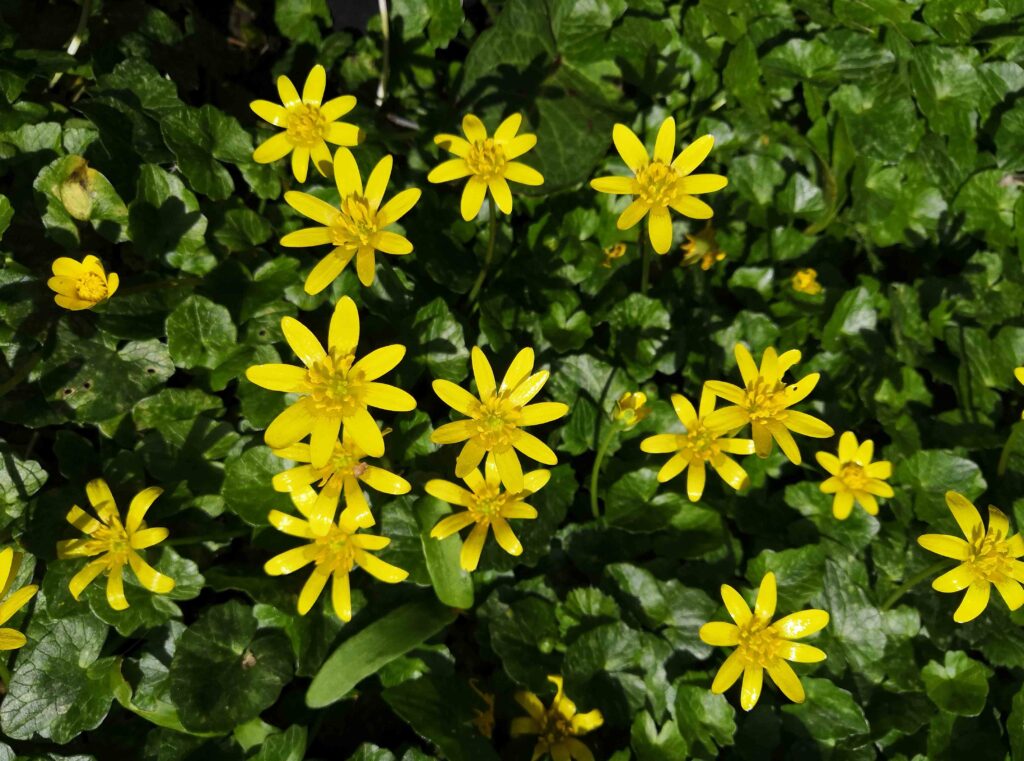
Another yellow wild flower with medicinal uses, (a treatment for piles, traditionally), that has established itself in the garden is the Lesser Celandine.


Less welcome were the myriad sycamore seedlings that appeared in the freshly dug meadow: a good fistful could be gathered just by standing in one spot, and the whole meadow yielded a bucketful.
Sycamore seeds need a seriously cold period in order to germinate and, because of weather patterns last autumn and this spring, 2023 has produced a ‘mass event’ nationally. Not only are they a nuisance for lawn-growers, but they also present a serious risk to some animals, particularly horses: the seeds are highly toxic, and ingestion is usually fatal.
Other invasive specimens to be dealt with include holly and ivy: for all their useful evergreen presence, they can become overgrown. We were therefore very grateful to Streetscape for freely dedicating half a day to this annual task.
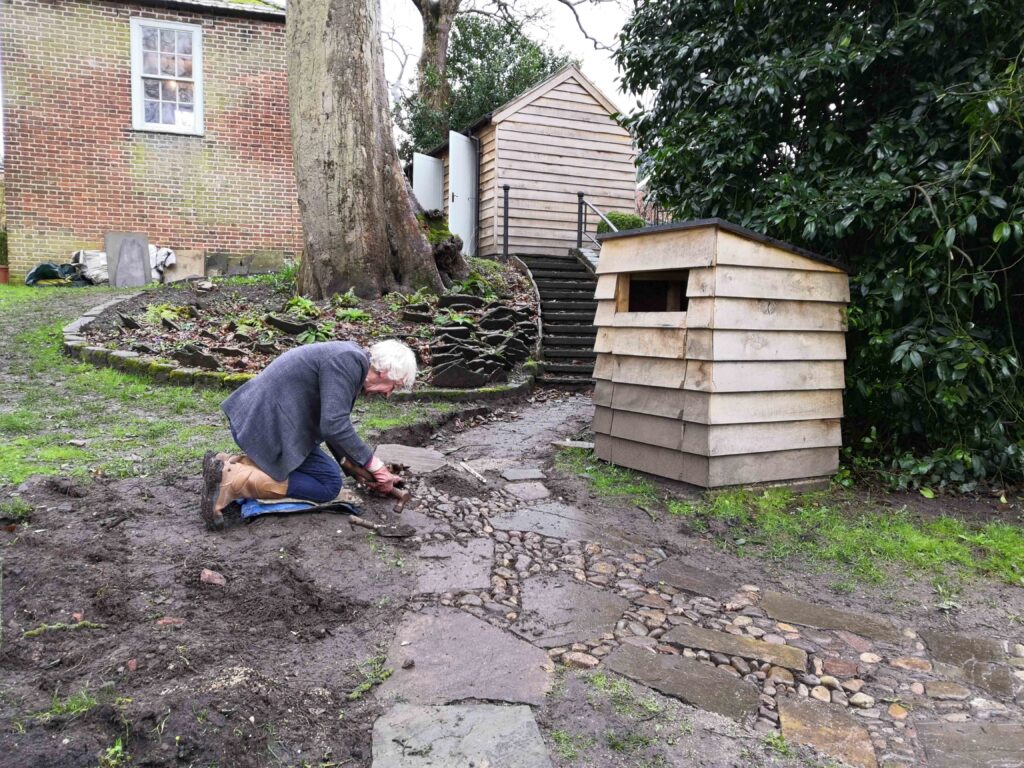
Nick meanwhile took on the development of a new curving path from the bottom of the steps down towards the garden shelter and the gate. The stylish cobbles are, once again, free , recycled bounty from the garden: they’re just rounded stones we’ve dug up. Waste not, want not!
A large, well-designed and vandal-resistant interpretation board, to go near the gate at the foot of the garden, has been in our long-term plan for some time. We recently applied to the Town Council for a financial contribution towards this: money is always an issue for a small charity like ours. However, we are ready to try new fund-raising activities ourselves, and this spring we’ve had successful sessions at car boot sales.
On the topic of funds, we are very grateful to those local organisations who generously offer us financial assistance for our projects: the new building could not have been created without their help. We invited the members to see the results of their contributions, and to have a look around the Bath House & Physic Garden. We were delighted to welcome representatives from both Congleton Inclosure Trust and William Dean Countryside and Educational Trust.

Despite all our successful activities, the many signs of new growth, and the sound of birdsong, this has not been the brightest spring so far, as the weather has so often been cold, damp and grey. We so much need some warmer weather – it will lift the spirits as well as helping the garden grow! Our first Open Day of the year is to be held on Saturday 20th May, and perhaps by then sunshine will be a more prominent feature. You can find more details on our Open Day page, and you will be very welcome whatever the weather!