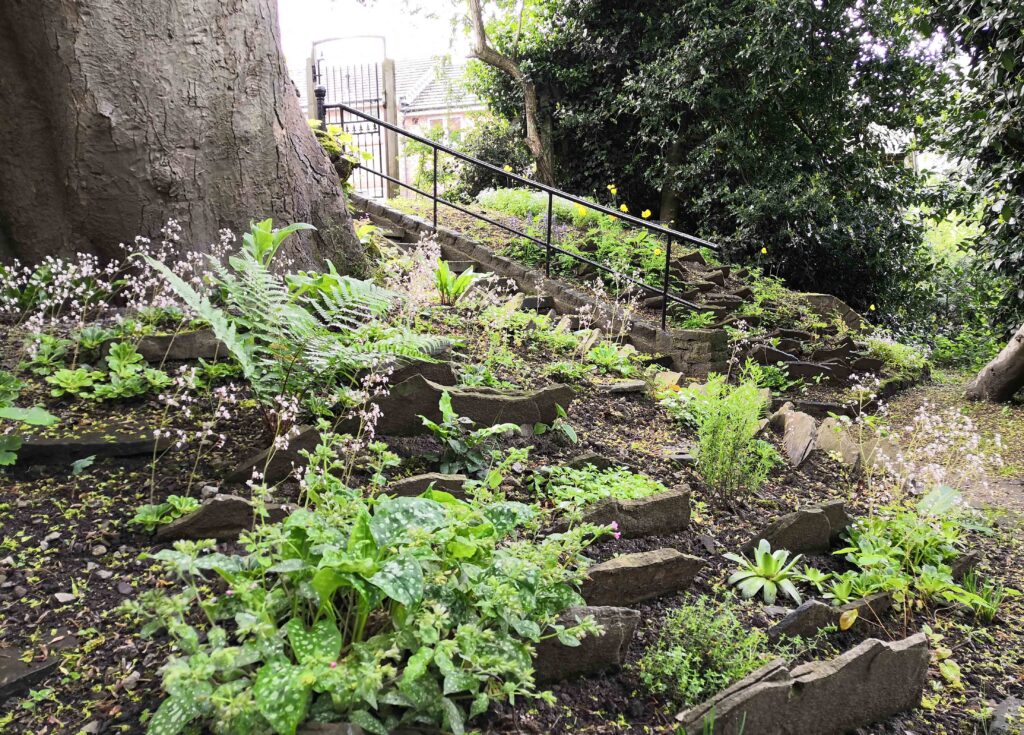
The erratic weather patterns this year actually seem to have resulted in healthy development in the garden during late spring and summer. We had a wonderful display of Medlar blossom in May, and the Iris germanica (a source of Orris Root) looked splendid – we have a lovely white variant of this plant. The new rockery, created around the base of the tree near the steps, and planted quite sparsely earlier in the year, was filling out nicely with London Pride, Lungwort and a variety of ferns and succulents.



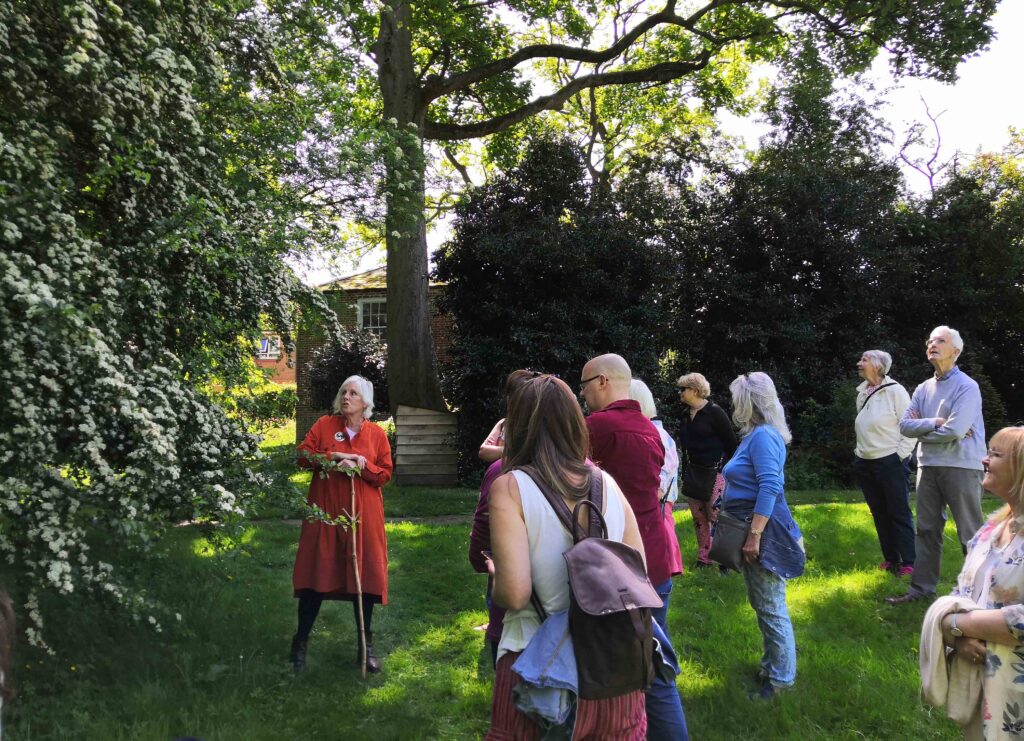
The garden was really coming into life when we held our annual May Open Day on a beautiful sunny Saturday. Many people who attended were discovering the history and beauty of this hidden corner of Congleton for the first time, and we were pleased that Barbara Wilkinson of the Herb Society could join us again to give her fascinating talks about the medicinal properties of our plants. We are always pleased to see so many visitors enjoying our site, and we even recruited a couple of new volunteers – always very welcome!

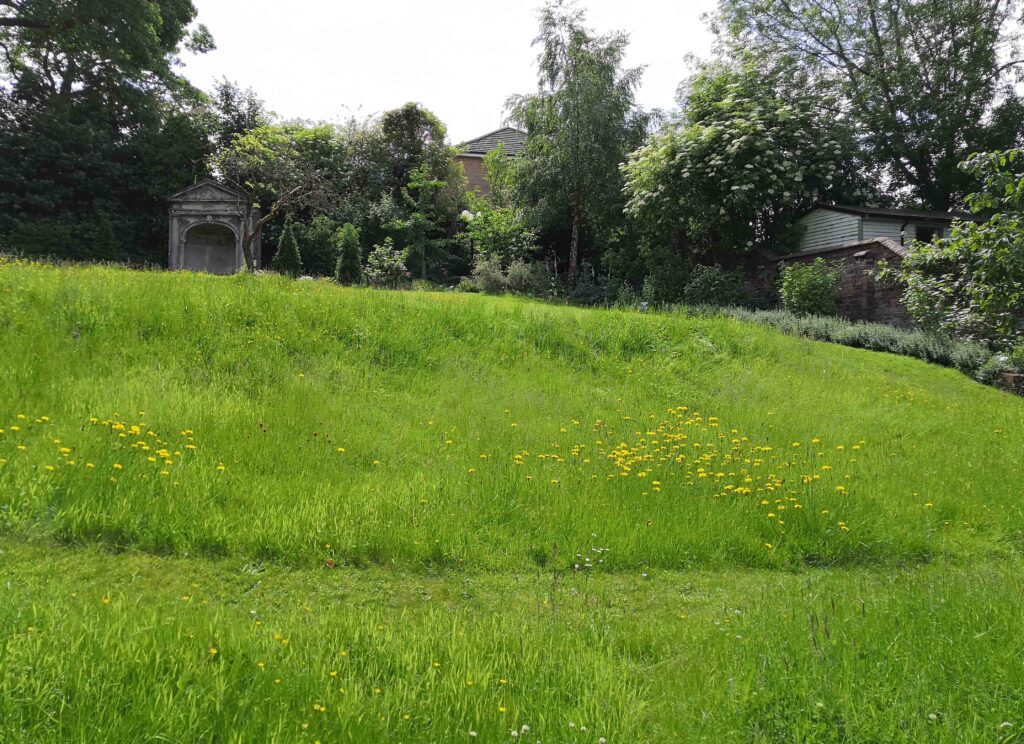
No-mow May merged into June, as the bees were happy, and there seemed no urgent need to interrupt their enjoyment of our grassy terraces. The only thing to consider is that the ground needs to be suitable for the Jazz and Blues Festival at the end of August, when this becomes a favourite rolling-down hill for our young at heart visitors.
June sees the annual Congleton Food & Drink Festival, and we had a stall in Bridge Street with herbs and flowering plants. We had another successful day and took very few plants back with us. Along with the gratifying sales, we much enjoyed talking to people about the Bath House & Physic Garden, sharing our knowledge and interest and encouraging them to try something new in their own plot.
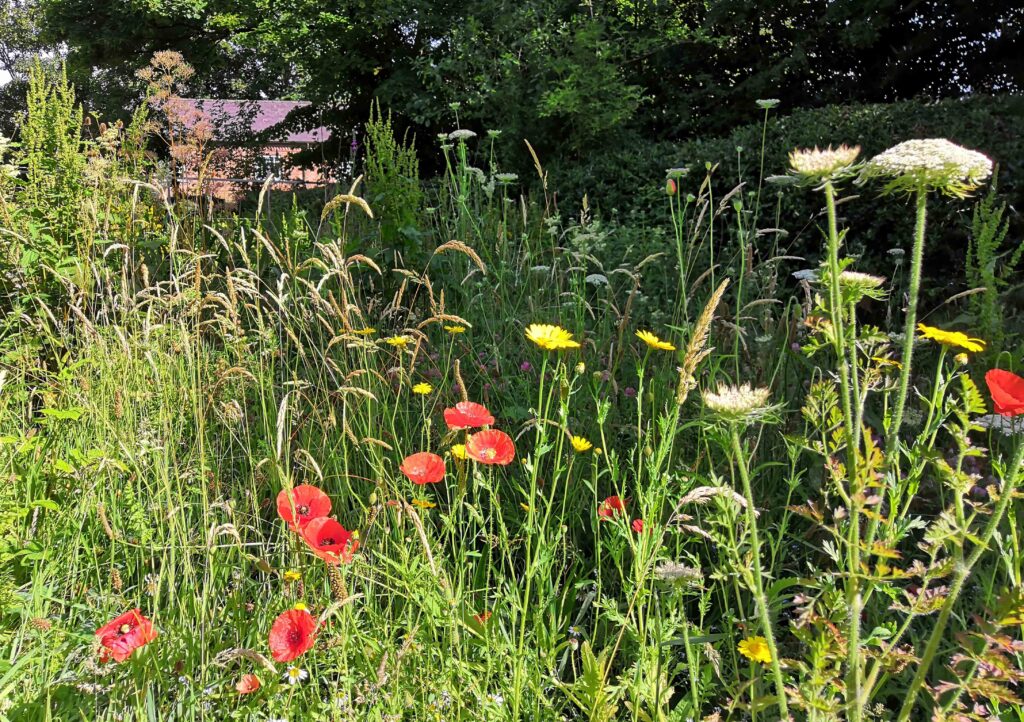
Some plants, rejected by other gardeners as ‘weeds’, we actively encourage in the Wildflower Meadow. Unfortunately, the prolonged wet weather earlier in the year prevented preparation of the whole wildflower area. It was therefore rather patchy in July, though poppies, corn marigolds, wild carrot, corn marigolds and yellow rattle managed to make themselves seen through the encroaching grasses.
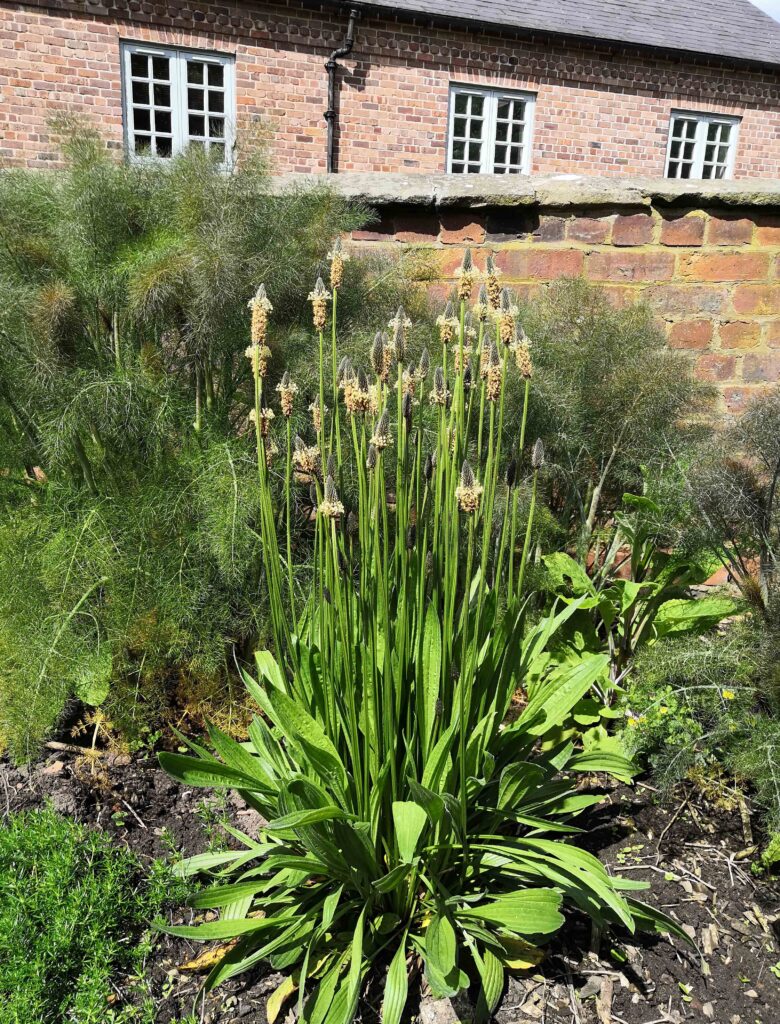
And talking of weeds, this is a fine specimen of a Ribwort Plantain! It seems happy to take pride of place in a border, having escaped the fate that would normally befall it. Like many other native plants, it gets a free pass in the Physic Garden due to its medicinal properties, and is handy to have around as quick relief for cuts and stings. The crushed leaves are astringent and antibacterial, and can help reduce blood flow. We will, however, try to restrain its seedlings from taking over the entire border!

The Monarda didyma, also known as Bergamot, or Bee Balm, provided a powerful pop of pink this month, among the Betony, Calendula, Lady’s Bedstraw and Fennel. The bees love it, and in case one should sting you, the crushed leaves can give relief. Balm for bees, or for bee stings – not sure which inspired the name: follow the link above to read its entry in Our Plants for more information.
You can read about the other named flowers in Our Plants too!
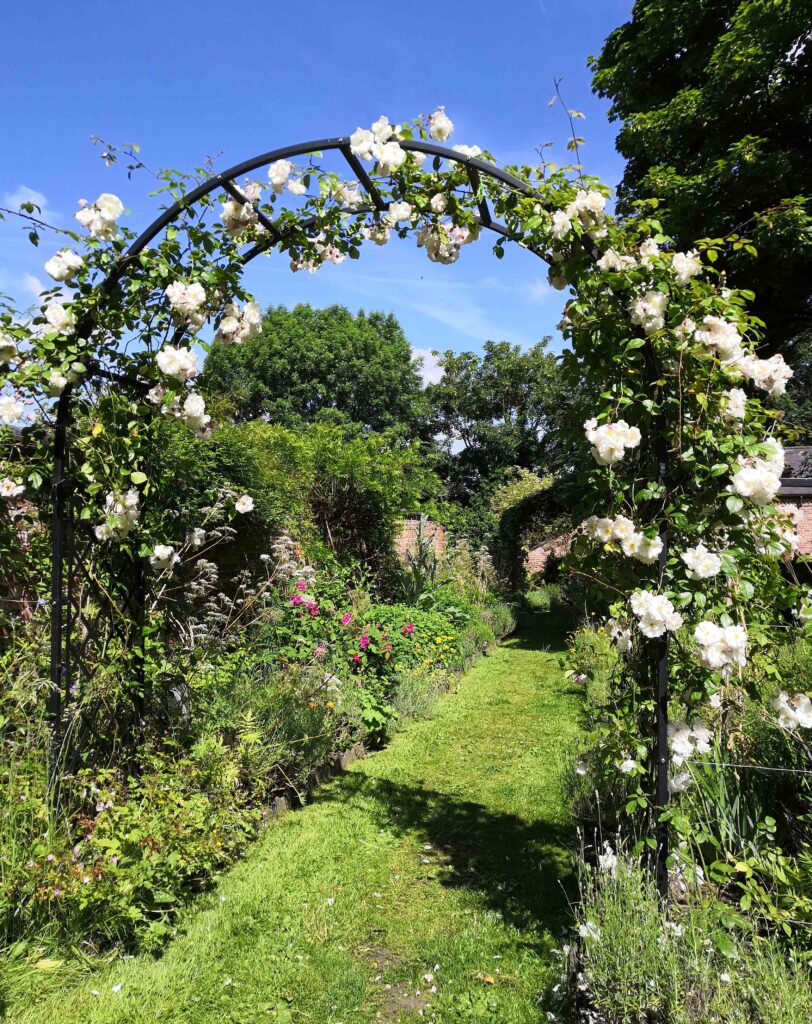
This has been a very good year for our roses: they have been flowering since June and now in July are abundant all round the garden. The rambling rose ‘Adelaide d’Orleans’ has flowered over the top of the arch for the first time, and the Apothecary’s Rose is doing well. At the top of the garden, a Dog Rose (Rosa canina) has spread widely through the trees, and the hedging roses, (Rosa rugosa) are also flowering fragrantly. We look forward to a good crop of rose hips later in the year!

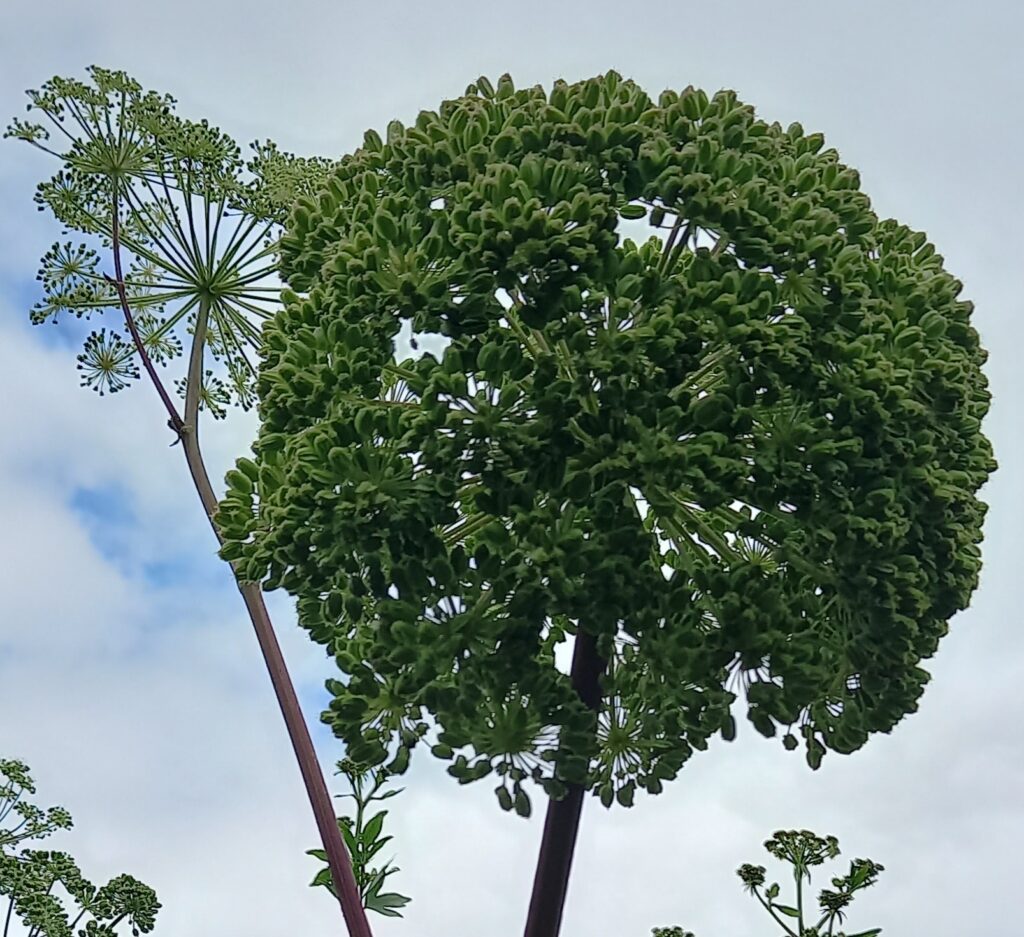
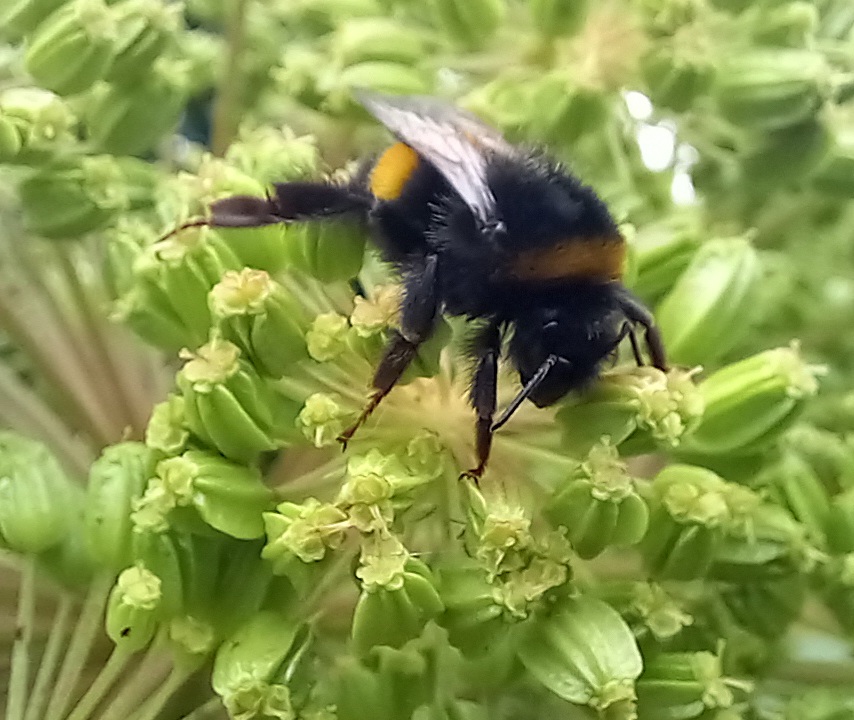
Summer continues, with surges of heat and occasional rain, and we hope that along with the rosehips we will have a plentiful bounty of fruits and seeds in autumn. Among them, the seed-heads of angelica already look strikingly architectural – though a bee has found some remaining flowers. The garden is looking glorious as summer progresses, which should please the judges visiting in July and August for the annual In Bloom competition.
Along with the planting, the new utility building is virtually finished, and we can start to turn our attention to new projects for the autumn.
Autumn is also time for Heritage Open Days: We will hold our annual event on
Saturday 17th September – all are welcome!