
The weather continues to break all the rules, giving us a cold, cloudy, wet July. It seems that the climate is not giving us any instant rewards for its recent temporary respite from carbon emissions. Work in the garden continues regardless, subject to last minute changes of plan in order to avoid a downpour.
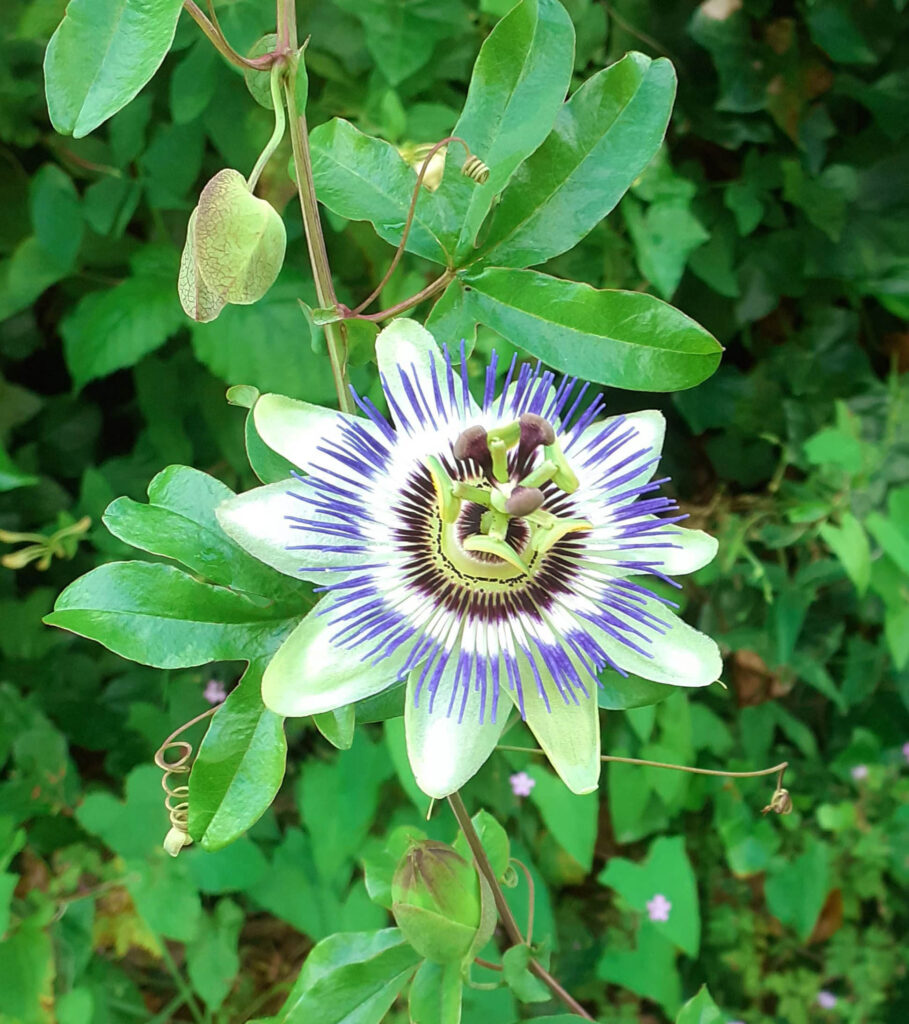
Our Passionflower has successfully come through the winter, the May drought, and the June/ July floods, and is happily now in flower again. The ‘Passion’ in its name refers to the idea that the various parts of the flower symbolise different aspects of Christ’s Passion, including three stigmas for the nails, and five stamens for the wounds. The medicinal properties, on the other hand, rather counteract the idea of passion, since the plant can be dried and used as a sedative.
Another striking feature of the garden this “summer” has been the tall spires of yellow flowers on the Dark Mullein. This is the first time the plants have flowered since being grown from seed – as they are biennial they spent last year as a low rosette of leaves. Find out more about this plant here.
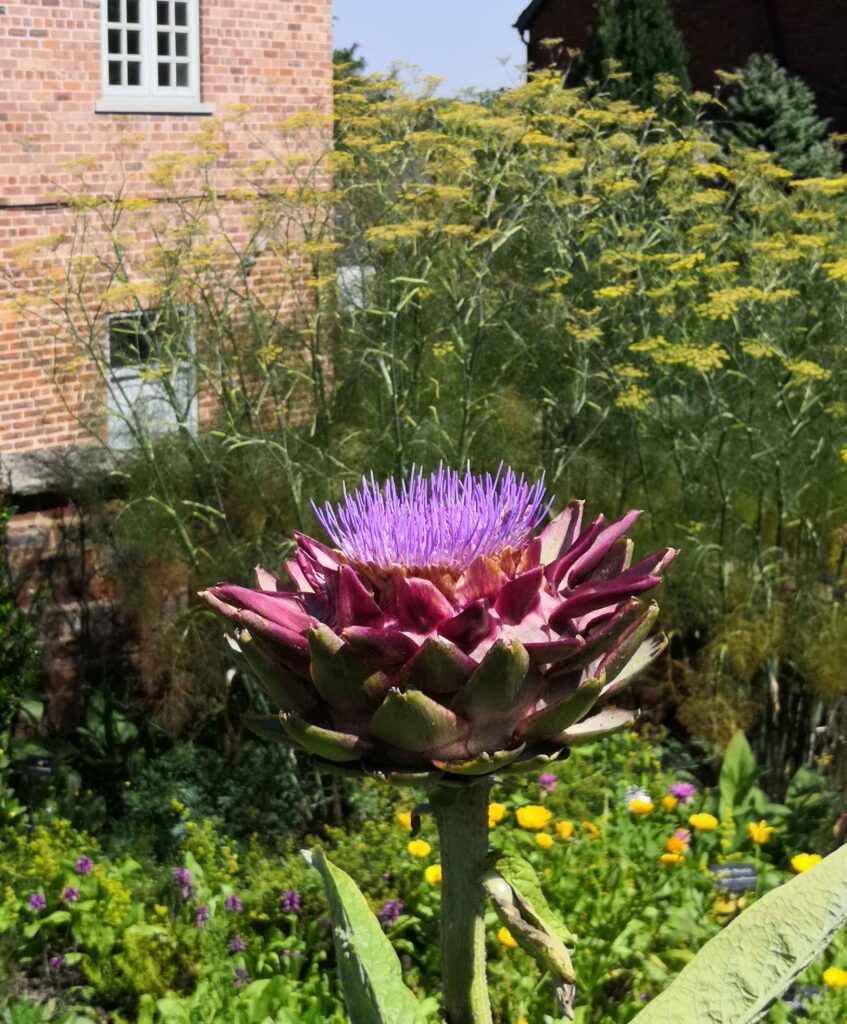
Finally, on the last day of July, we had some warm sunshine, bringing out the colours of our Globe Artichoke. It always seems too much trouble to go to, to get at the edible part – as well as having to destroy a beautiful flower. The leaves have been found to have medicinal uses, in treating liver and gall bladder diseases, and helping to lower cholesterol.
This sunny day was an opportunity to continue with our virtual garden tour, picking up from where we left off in May. This has been added to our Virtual Open Day page. We have also been sorting out some old photographs of the early days of the building restoration. We hope to build these into a display for the website, to be ready at the end of September for a virtual version of Heritage Open Day.
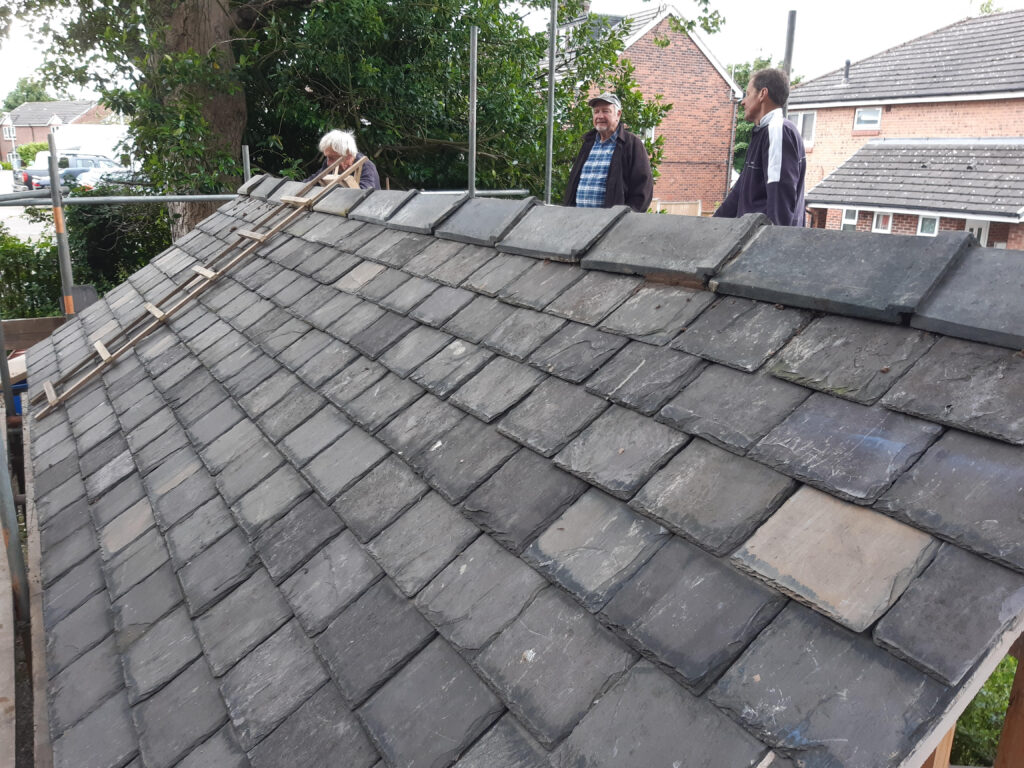
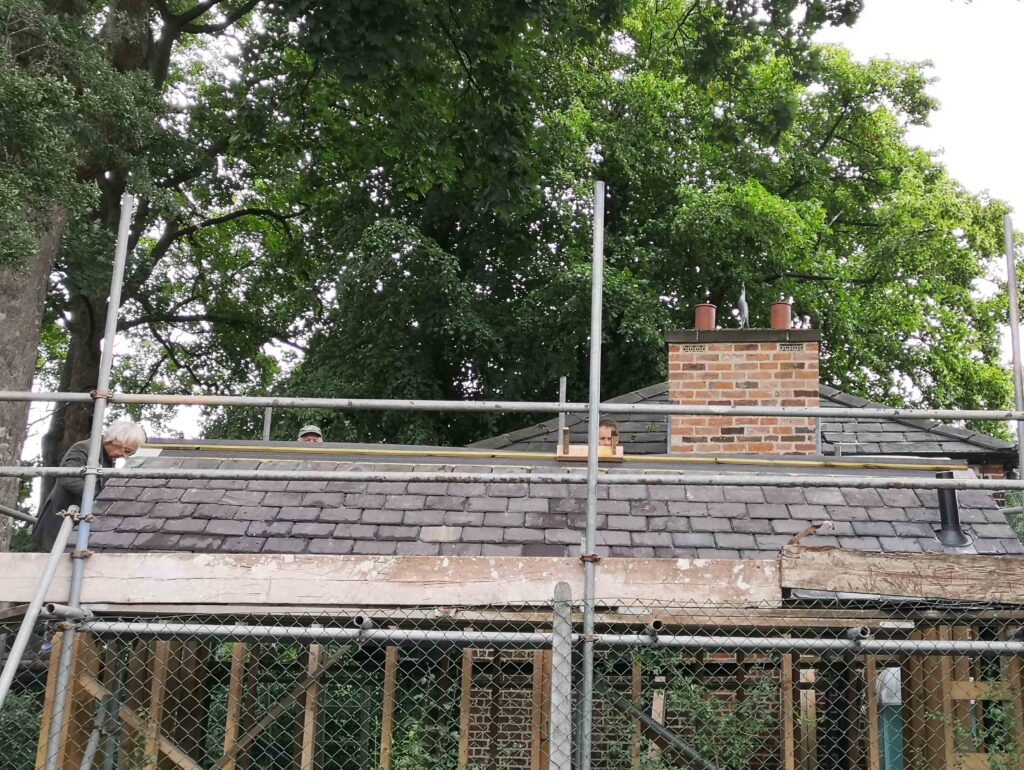
Good progress has been made with the new building for volunteers. The slate roof has been completed and, with the use of reclaimed materials, fits in perfectly with the site and the neighbouring Bath House. Nick has begun work on the door frames, and the window frames are being constructed off site. A key feature of the building will be the use of long lasting oak cladding and the team are looking forward to installing this over the next few weeks.
Maintenance work on site continues with this year’s treatment of the Bath House doors with linseed oil and also a protective coat for the main wooden gate and the pedestrian gate. Meanwhile, Howard has taken on the challenge of reorganising and tidying our current tool and equipment store. The store is tiny, and in true garden shed style, crammed with every kind of implement. We wish him luck. He will have to proceed with caution as even the least promising item may be a volunteer’s favourite and essential tool!