It’s been a busy summer – and autumn – for the Bath House & Physic Garden team, and as we had to confess in the Spring Blog, we weren’t able to provide regular updates. Apologies to all; and here are some highlights for you.
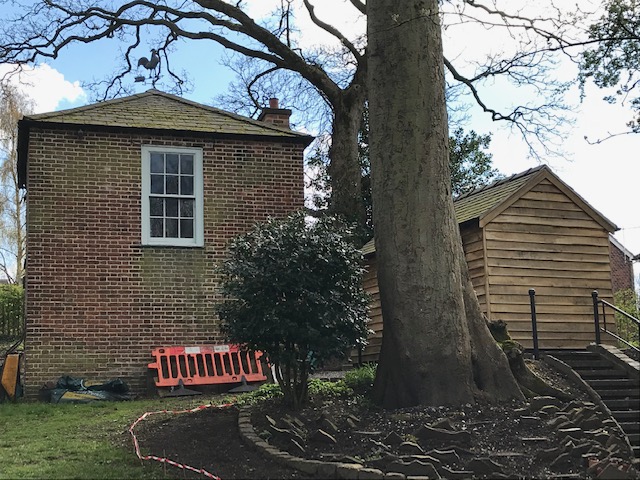
The new building, with its oak cladding and reclaimed slate roof, complements the Bath House without detracting from the historic nature of the site. Electricity was installed in July, and as we were unable to secure the services of a plasterer it was decided instead to insulate and board the interior, ready for painting. Around the tree and steps leading down from the building, the team has started a rockery, using stone reclaimed from other projects. This will be a continuing project during the summer.
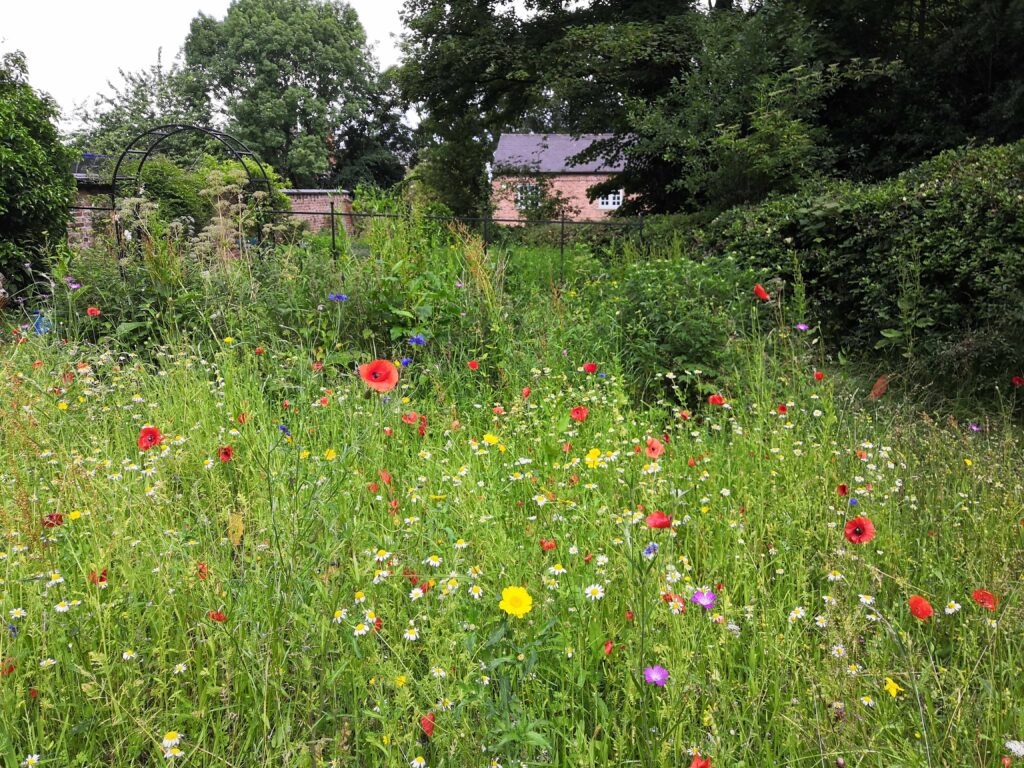
Elsewhere the garden produced a wonderful show of colour in the wildflower meadow. Poppy and corncockle, yellow rattle and cornflower are among the species that we encourage, only achieving this effect through a lot of hard physical work earlier in the year.
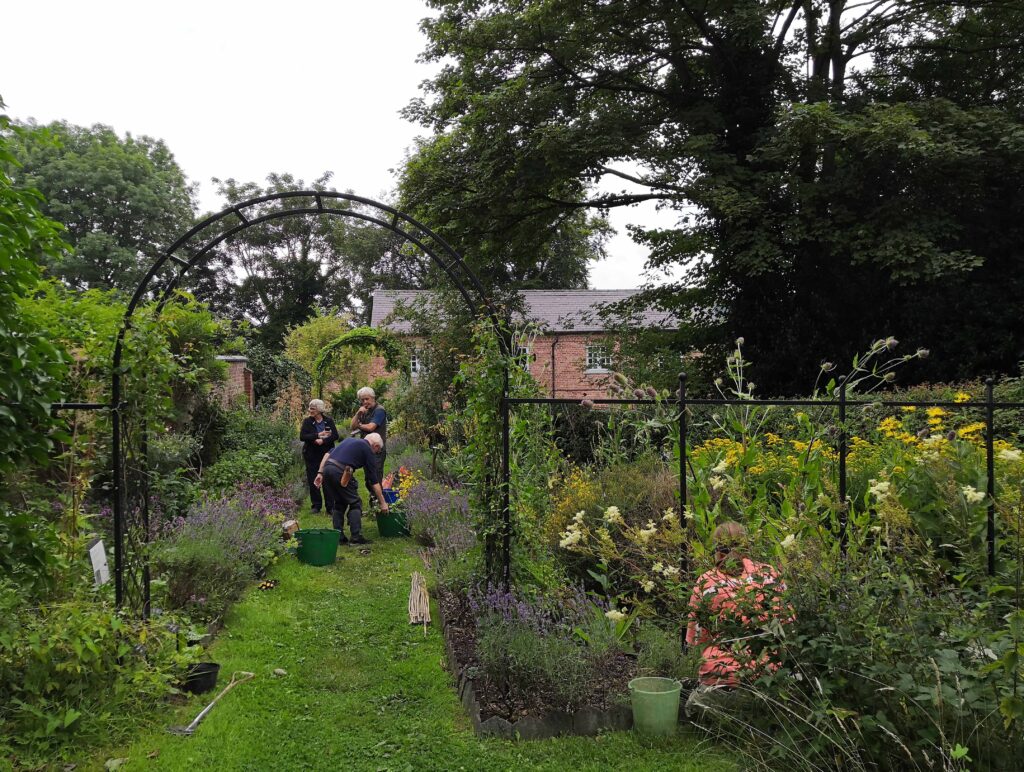
We entered the It’s Your Neighbourhood section of the national In Bloom competition again, and preparation for judging day required some tidying up, tying in and weeding – all the team hoping for good weather on the day. All this preparation would, of course, also be useful for the family event to be held in the garden during Congleton’s Jazz and Blues festival at the end of August.
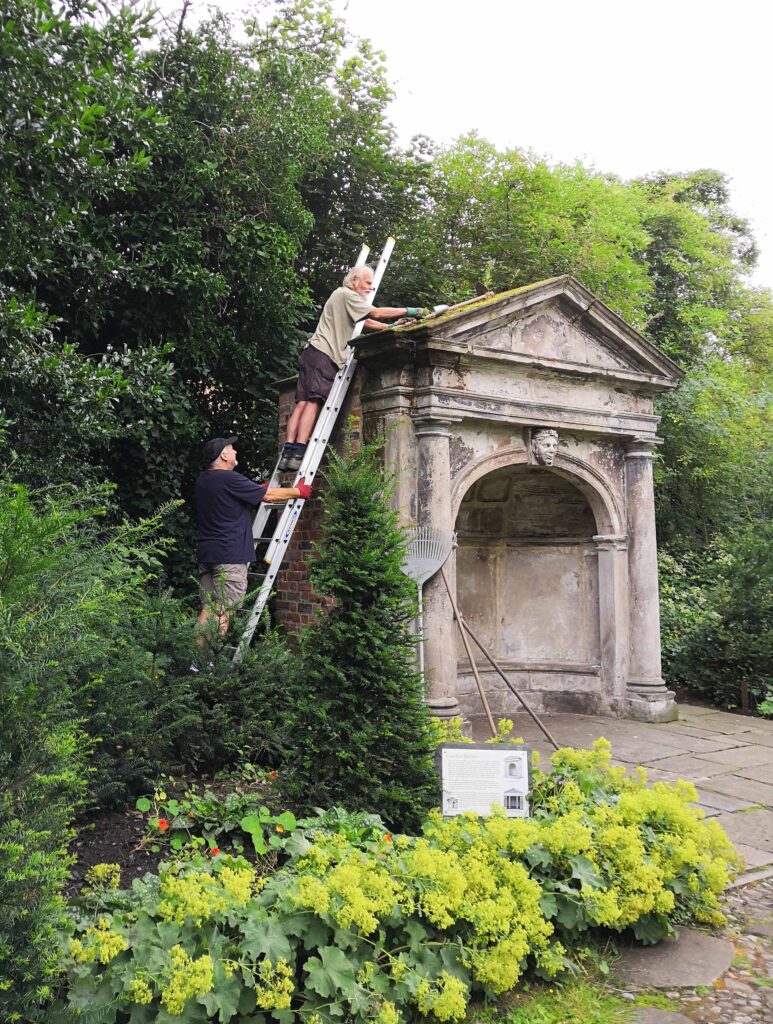
Some gardening jobs require a head for heights! Clearing the weeds from the Adam-style shelter is one of them. The shelter, like the Bath House, is Grade II listed, and part of the interesting history of the site. The historical connection of cold-water bathing and health, represented by our Georgian Bath House, is celebrated at an annual event that this year is being held on 18th September as part of Heritage Open Days.

Meanwhile some parts of the garden are looking good without much help – the chicory’s vivid blue blooms tower above other culinary herbs at the lower end of the garden. Although it is all known as the Physic Garden, reflecting the medicinal benefits of our plants, many plants have other benefits, such as making dyes or tasting good! One bed is specially designated for Officinalis plants, such as Rosa Gallica Officinalis, the Apothecary’s Rose. The Latin name was given to certain plants in reference to the officina: a room used in medieval monasteries to preserve and prepare herbs used in medicines. Our Heritage Open Day therefore celebrates this historical aspect of the garden too.
To find out more about Jazz and Blues, and Heritage Open Days, do read our following posts.